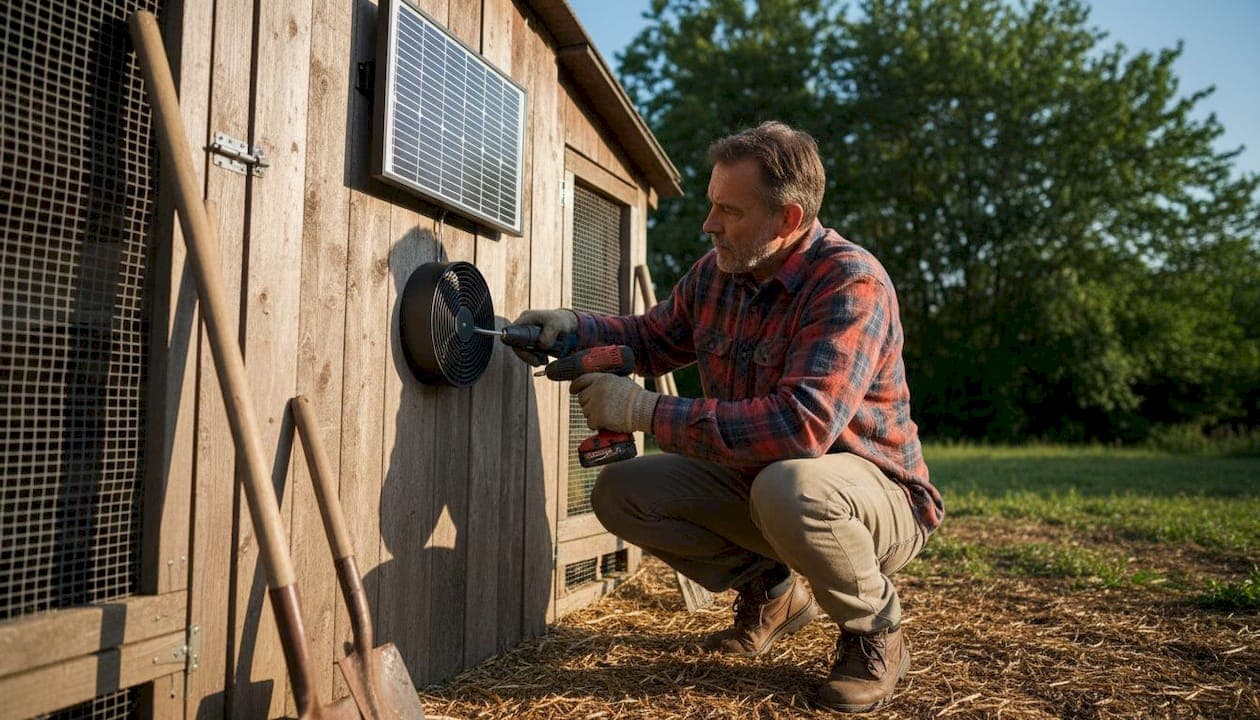
What are the best solar chicken coop fans?
The best solar chicken coop fans combine brushless DC motors, 25W or higher solar panels, and IP67-rated waterproof housings to deliver dependable airflow without grid power. Dual-fan kits running at high speed move roughly twice the air of single-fan units, which matters when summer heat pushes coop temperatures into dangerous territory. Here is what the top configurations look like in practice:
- dual-fan kits with brushless DC motors and suitably rated solar panels: Paired fans at 3500 RPM provide strong cross-ventilation for coops up to roughly 200 square feet. A 25W panel matches the output needed for reliable operation in variable conditions.
- Battery-backed 8-inch exhaust fans: A 25W panel paired with an 8-inch fan and an 18650 battery pack offers robust airflow for larger coops, with battery backup ensuring runtime through nighttime and cloudy stretches.
- 6-inch single exhaust fans with anti-backflow valves: Running at 2800 RPM, these wall-mount units suit smaller coops, providing consistent ventilation. The anti-backflow valve blocks wind and rain from pushing back through the fan opening.
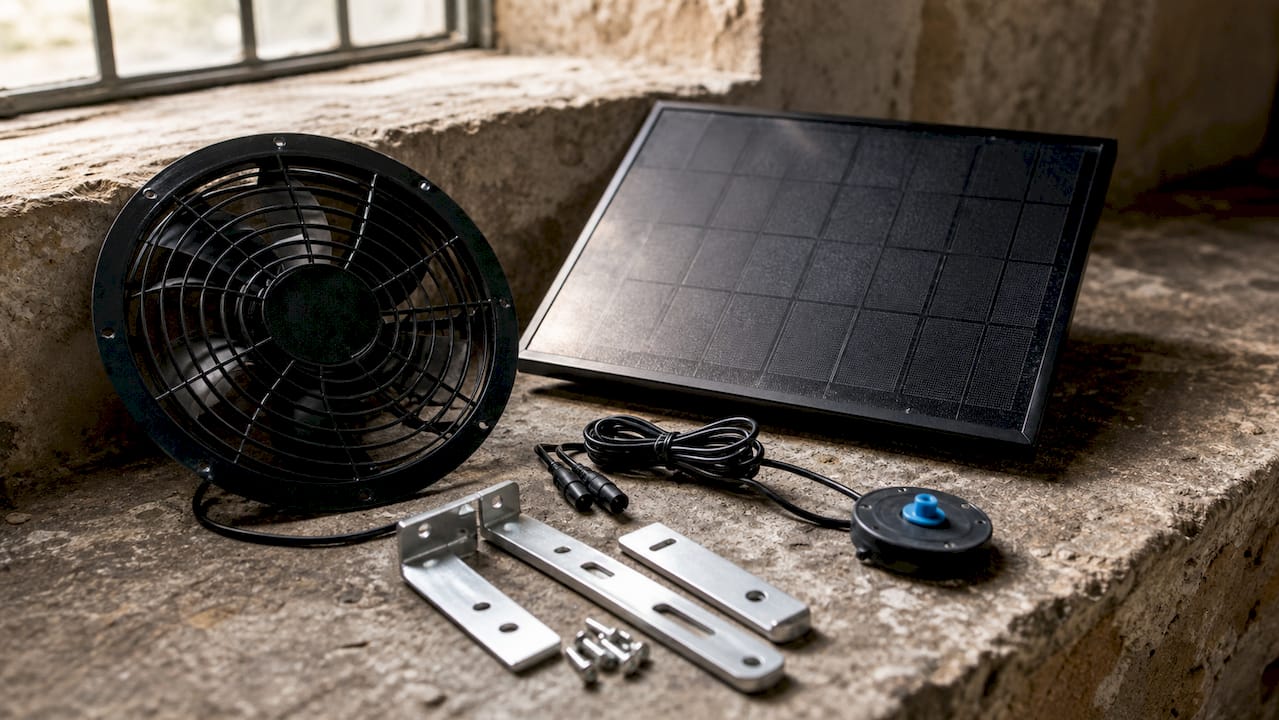
- DIY dual-fan kits with flexible wiring: Kits with 15-foot cord lengths per fan let you position one fan as intake and one as exhaust, or run both for exhaust. Mounting plates, zip ties, and screw kits are included, so no electrician is needed.
- IP67-rated all-weather systems: Full waterproof protection across the panel, connector, switch, and fan housing means the system survives rain, morning dew, and the ammonia-heavy air inside a working coop.
Table of Contents
- Key features to look for in a solar chicken coop fan
- How to install a solar coop fan for maximum airflow
- Why durability standards matter in a poultry environment
- Benefits of going solar for poultry house ventilation
- Westernharmonics: the original U.S. solar fan kit pioneer
- Westernharmonics solar fans: built for your coop
- Key Takeaways
Key features to look for in a solar chicken coop fan
Brushless DC motors are the single most important spec to verify before buying. They run quieter than brushed motors, generate less heat, and last far longer in the dusty, corrosive environment inside a coop. Sealed brushless motors paired with dual ball bearings resist the fine particulate matter that kills standard motors within a season.
Solar panel wattage is where most buyers make the wrong call. A 10W or 15W panel works fine on a clear July afternoon, but output drops sharply under cloud cover or at dawn and dusk. Panels rated for higher wattage maintain usable fan speed through marginal conditions, which is exactly when heat stress in a coop tends to build.
- IP67 or IPX7 waterproof rating: Protects the fan body, connector, and switch from moisture and dust. This is the industry benchmark for rural agricultural hardware.
- Fan diameter and airflow: A 5.5-inch fan suits coops under 100 square feet. Step up to a 6-inch or 8-inch unit for larger flocks or enclosed sheds where heat accumulates faster.
- Noise level: Fans designed to operate quietly avoid disturbing laying hens or stressing young chicks.
- Safety features: Double protection nets over the blade and anti-backflow valves prevent small birds from contacting spinning blades and stop wind-driven rain from entering.
- Battery backup option: For coops in areas with frequent cloud cover or where nighttime cooling matters, a battery pack using 18650 cells extends runtime well past sunset.
Pro Tip: Choose a panel rated at least 25W even if the fan's listed wattage is lower. The extra headroom keeps airflow consistent on partly cloudy days, which is when your flock needs cooling the most.
How to install a solar coop fan for maximum airflow
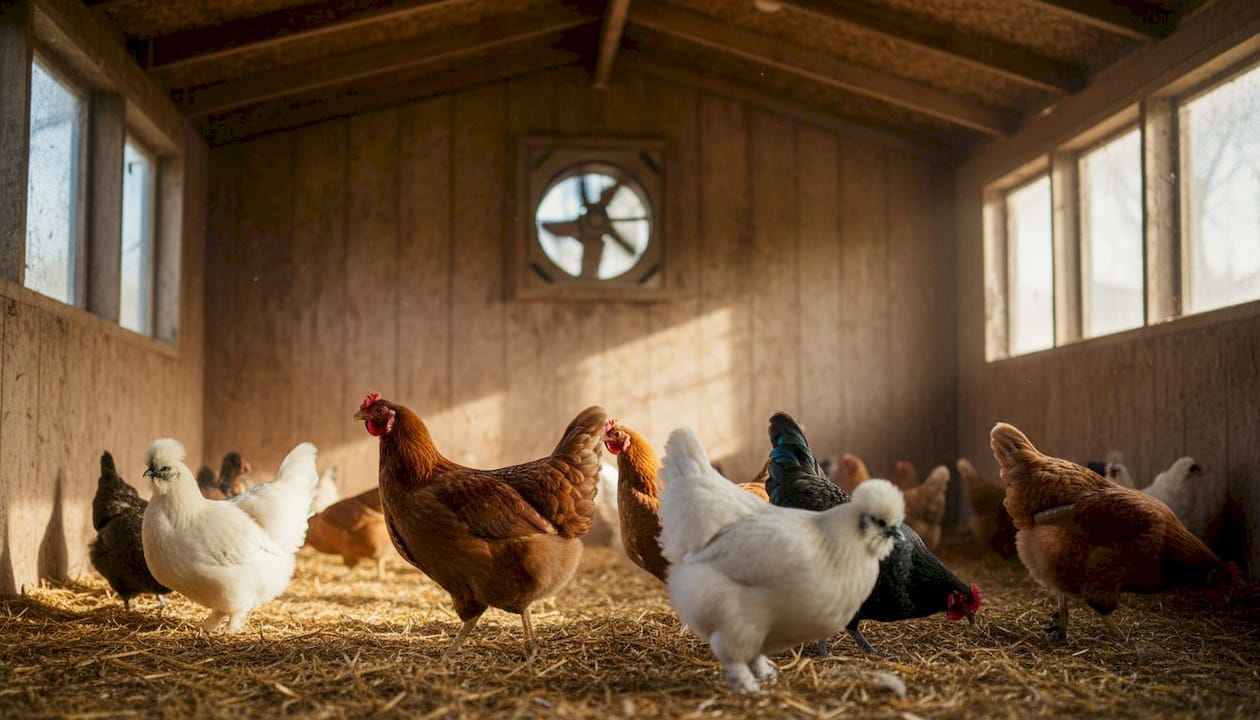
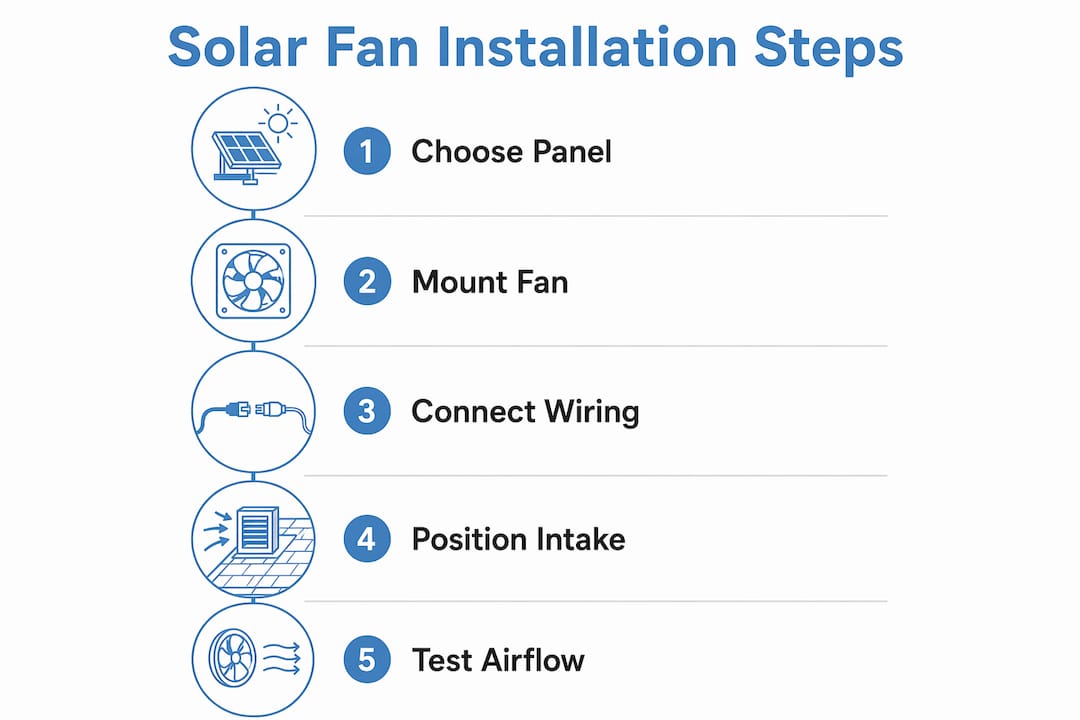
Placement determines whether a solar fan actually cools your coop or just moves stale air in circles. The principle is straightforward: intake low, exhaust high. Warm, humid air rises naturally, so mounting an exhaust fan near the roofline on one wall and an intake vent near the floor on the opposite wall creates a stack-effect draft that pulls fresh air through the entire space.
Avoid mounting fans directly above roosts. Birds sitting in a direct airstream overnight get chilled, which suppresses egg production and stresses their immune systems. Position exhaust fans above the highest roost bars to avoid chilling birds.
- Orient the solar panel south-facing at a tilt angle matching your latitude for maximum daily sun exposure. Avoid any shade from trees, roof overhangs, or adjacent structures.
- Use the full cord length. Most kits include long cords, giving you flexibility to mount the panel on a sunny exterior wall while the fan sits inside the coop.
- Wire in an on/off switch if the kit includes one. This lets you shut the fan down on cold winter mornings without disconnecting anything.
- Seal the fan cutout around the fan body with weatherproof caulk to prevent drafts and pests from entering around the edges.
- Keep the panel clean. Dust and bird droppings cut solar output noticeably. A quick wipe with a damp cloth every few weeks maintains peak performance. For more on panel maintenance practices in agricultural settings, the guidance from Priory Electrical covers the key environmental factors that reduce efficiency over time.
Why durability standards matter in a poultry environment
A chicken coop is one of the harshest environments you can put electronics into. Ammonia from droppings corrodes metal contacts and degrades plastic housings faster than outdoor weather alone. Fine dust from bedding and feathers works into motor bearings and clogs vents. A fan that looks fine after one summer can fail completely by the second.
IP67 certification means the housing withstands dust ingress entirely and can survive submersion in water up to one meter for 30 minutes. In a coop context, that rating translates to surviving pressure washing, heavy condensation, and the constant moisture from bird respiration. IPX7 covers the same water resistance without the full dust rating, which is still adequate for most farm applications.
- Brushless motors with sealed housings outlast brushed motors significantly in dusty conditions because there are no carbon brushes to wear down or corrode.
- ABS plastic housings resist the mild acid environment created by ammonia better than uncoated metal frames.
- Tempered glass solar panels with multi-layer lamination are rated for over 10 years of service life in outdoor farm conditions.
- Double blade protection nets keep feathers, straw, and small chicks away from moving parts, reducing both injury risk and motor strain.
Choosing hardware that meets these standards upfront costs more than a basic fan. It costs far less than replacing a failed unit mid-summer when your flock is under heat stress.
Benefits of going solar for poultry house ventilation
The most obvious benefit is energy independence. A solar fan for a chicken coop runs entirely on sunlight, which means no extension cords running from the house, no added electricity bill, and no ventilation failure during a grid outage. For remote coops, detached barns, or any structure more than 50 feet from a power source, solar is often the only practical option.
Operating costs after installation are effectively zero. The sun charges the panel, the panel runs the fan, and the only maintenance is keeping the panel surface clean. Compare that to a wired exhaust fan drawing power continuously through a hot summer.
- Quiet operation: Solar DC fans at 36dB or below produce less noise than a standard box fan on low. Hens are sensitive to sudden loud sounds, and consistent low-level noise from a fan is far less disruptive than the on/off cycling of a thermostat-controlled electric unit.
- Consistent airflow on cloudy days: A sufficiently rated panel maintains fan operation through partial cloud cover, unlike lower-wattage units that can stall when sunlight is low.
- No wiring permits or electrician fees: Most solar fan kits are plug-and-play with DC connectors, keeping installation simple and legal without licensed electrical work.
- Year-round usefulness: In winter, running a fan at low speed removes moisture and ammonia without dropping coop temperature dangerously. Ventilation is a year-round need, not just a summer fix.
Solar panel efficiency does vary by season. In northern states, December and January sun angles reduce output, so a higher-wattage panel provides a useful buffer during shorter winter days.
Westernharmonics: the original U.S. solar fan kit pioneer
Westernharmonics created the solar-powered fan kit category in the United States. Before copycat products flooded the market, Westernharmonics engineered and shipped the first solar fan kits designed specifically for off-grid farm and rural applications. That history matters because it reflects a company that has solved real-world problems in real barns, not just spec-sheet problems in a lab.
The engineering philosophy at Westernharmonics centers on three things: simplicity, durability, and dependable performance where the grid ends. Every product we build is designed to work in the same conditions your coop faces: heat, dust, moisture, and the kind of daily neglect that any working farm demands. Our DC micro-power units and off-grid cooling hardware are used across barns, greenhouses, and rural infrastructure throughout the country.
We have also expanded beyond fans. The PowerJam portable solar product and our automated microgrid design tool reflect the same principle: make off-grid power accessible without requiring an engineering degree to set it up. The microgrid tool answers questions, builds system designs, and walks you through the process so you can plan your setup confidently.
Pro Tip: When sizing a solar fan system for a larger coop or barn, use Westernharmonics' microgrid design tool to calculate the right panel wattage and fan configuration before you buy. Getting the sizing right the first time saves money and avoids underpowered setups.
Westernharmonics solar fans: built for your coop

If you have read this far, you know what separates a fan that lasts from one that fails by August. Brushless motors, 25W or higher panels, IP67-rated housings, and correct placement. Westernharmonics builds exactly that, and has since before most of the products now crowding the market existed.
We offer solar fan kits engineered for the specific demands of off-grid farm buildings: coops, barns, sheds, and greenhouses where grid power is unavailable or impractical. Our kits ship with everything needed for a clean installation, and our microgrid design tool helps you configure the right system for your space before you order. Visit Westernharmonics to see current kit options and get your coop ventilated the right way.
Key Takeaways
A 25W solar panel paired with IP67-rated brushless DC fans, installed with intake low and exhaust high, delivers the most reliable poultry house ventilation without grid power.
| Point | Details |
|---|---|
| Panel wattage matters most | A 25W panel maintains fan speed through cloud cover and low-light conditions; lower-wattage units stall when you need them most. |
| IP67 rating is the durability floor | Ammonia and fine dust degrade unprotected motors fast; IP67-certified housings are the minimum for long-term coop use. |
| Placement drives performance | Intake low, exhaust high creates a stack-effect draft that clears heat and moisture far more effectively than any single-wall setup. |
| Battery backup extends runtime | With sufficient charging, the battery runs the fan for extended hours, covering nighttime and cloudy stretches. |
| Westernharmonics for off-grid reliability | Westernharmonics pioneered the U.S. solar fan kit market and offers purpose-built kits for coops, barns, and remote farm structures. |